How to Reduce Restaurant No-Shows: 9 Measures That Actually Work
Guests book and don’t turn up? Nine ways restaurants reduce no-shows: confirmations, reminders, easy cancellation, waitlists, card guarantees and no-show fees.
By Viktor HolterUpdated: 4 min read
Key points
- Most no-shows come from forgetfulness, not bad intent.
- Most effective: written confirmation, a reminder the day before and cancelling by message.
- For groups and high-demand dates: deposits or card guarantees.
- No-show fees only when they are clearly agreed before the booking.
The most effective way to reduce no-shows is three simple steps: confirm every booking in writing, send a reminder the day before and let guests cancel with a message. For large groups and high-demand dates, add deposits or card guarantees. It’s worth it, because a booked table that stays empty costs you twice: the revenue is gone, and you probably turned away other guests who would have loved to come.
You’ll never eliminate no-shows completely. But most guests who don’t show up simply forgot, or couldn’t be bothered to cancel. That’s exactly what the following measures address.
1. Confirm every booking in writing
A short confirmation by WhatsApp, text message or email turns a quick phone call into a real commitment. Include date, time, party size and the name on the booking, and say explicitly how the guest can cancel.
Hi [Name], your table for [number] on [date] at [time] is booked. If your plans change, just reply to this message and we’ll pass the table on to other guests. Looking forward to seeing you! [Restaurant]
2. Send a reminder the day before
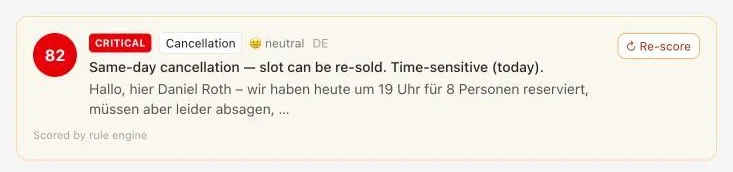
The single most effective measure is a reminder the day before or on the morning of the booking. It jogs forgetful guests’ memory and gives everyone else an easy way to cancel in time. Ask for a quick reply, like “Yes” or “Cancel”.
3. Make cancelling as easy as possible
If cancelling means calling at 6 pm when nobody picks up the phone, many guests just won’t show. Let people cancel with a message, around the clock, on the channel they booked through. Thank every guest who cancels. A cancellation is far better than an empty table.
4. Keep a waitlist
When you’re fully booked, note down guests who’d like to come. When someone cancels, you can fill the table right away. With a WhatsApp or Instagram message, that takes minutes.
5. Plan large groups more firmly
- Reconfirm a few days before: is the party size still right?
- Pre-order a set menu for groups above a certain size.
- Deposits for parties, company dinners and private events. This is common in hospitality and usually accepted when communicated clearly up front.
6. Card guarantees on high-demand dates
Many booking systems let guests leave card details without being charged. That raises the bar for simply not showing up. Use it selectively, for example on New Year’s Eve, Valentine’s Day or for tables of more than six, not for every booking, because it also puts off spontaneous guests.
7. No-show fees: only with a clear agreement
Charging a fee for no-shows is generally possible, but it has to be agreed clearly before the booking, for example in booking terms the guest accepts. Consumer protection law in many countries limits flat fees set in standard terms; in the EU the basis is the Unfair Contract Terms Directive. They shouldn’t exceed the typical loss, and guests may be entitled to show that the actual loss was lower.
8. Reply to booking requests quickly
It sounds surprising, but it helps: guests who wait two days for a reply to their booking request have often booked elsewhere and then forget to cancel with you. These no-shows are really double bookings. Fast replies across every channel prevent them. Our guide on answering guest messages faster shows how to manage that even in busy weeks.
9. Measure your no-shows
Log every no-show with date, time, party size and the channel the booking came through. After a few weeks you’ll see patterns: do no-shows cluster on one channel, on certain days or with large groups? Then you know where to act.
Frequently asked questions
What is a no-show in a restaurant?
A no-show is a guest who books a table, doesn’t turn up and doesn’t cancel. The table stays empty even though it could have gone to other guests.
Can a restaurant charge a no-show fee?
Generally yes, if the fee was clearly agreed before the booking, for example in booking terms the guest accepts. Consumer protection law in many countries limits flat fees in standard terms to the typical loss. Have your terms checked by a lawyer in your country.
When should I send the reminder?
The day before or on the morning of the booking. That leaves enough time to re-sell the table if the guest cancels. Ask for a quick reply like “Yes” or “Cancel”.
Should every booking require a card guarantee?
Usually not. It reduces no-shows but also puts off spontaneous guests. Use it selectively: on New Year’s Eve, Valentine’s Day and for tables of more than six.
Summary
Most no-shows aren’t malicious. They come from forgetfulness and a lack of easy ways to cancel. A written confirmation, a reminder the day before and a simple way to cancel solve most of the problem. For groups and high-demand dates, add deposits or card guarantees.
Hospello recognizes booking requests in WhatsApp, Instagram, Facebook and email, highlights date, time and party size, and flags cancellations as urgent so you can re-sell freed-up tables quickly.